


GCC secretary-general and Bahraini and UAE ministers say pipelines and railways will add redundancy but cannot replace the waterway
Register for MEED’s 14-day trial access
Senior Gulf officials have rejected suggestions that new pipelines and rail links will allow the region to do without the Strait of Hormuz, arguing that the waterway will remain essential to the GCC and the global economy.
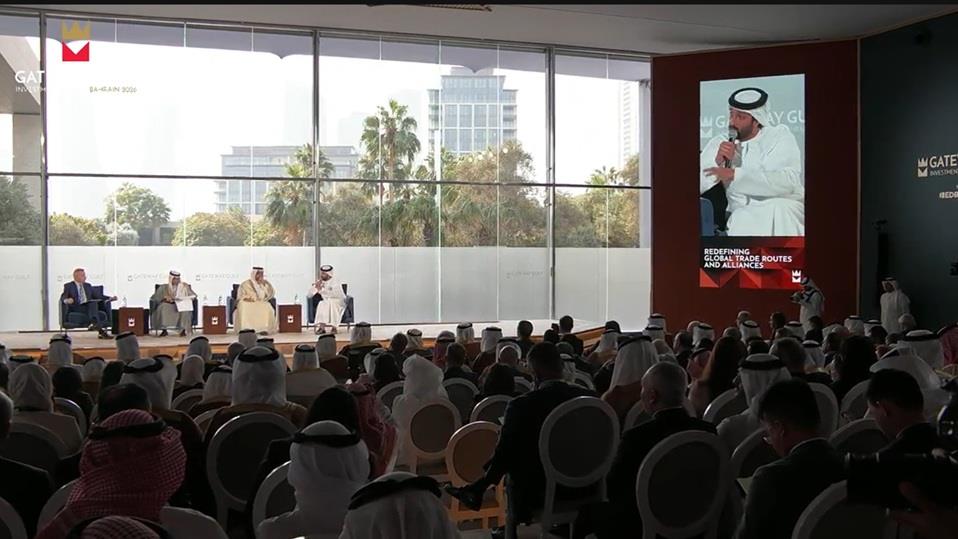
Speaking at the Gateway Gulf investment forum in Manama on 1 November, GCC secretary-general Jasem Mohamed Albudaiwi said keeping the strait open is the responsibility of the international community, not of any one country or group of partners. "We hear some voices that maybe we should seek alternatives to Hormuz," he said. "Fine, we will get the pipelines. We will get the GCC railway. But that doesn't mean Hormuz is nobody's business."
Albudaiwi called for the strait to remain open in line with international law, including the 1982 UN Convention on the Law of the Sea.
Shipping through the strait has been severely restricted since the US and Israel launched strikes on Iran on 28 February and Iran retaliated with attacks on GCC states and commercial vessels.
Bahrain's Finance & National Economy Minister, Sheikh Salman Bin Khalifa Al-Khalifa, said building redundancy makes sense, but treating the strait as dispensable does not. He said the waterway carries 30% of global liquefied natural gas (LNG) exports, 20% of aluminium exports and 30% of fertiliser exports. "Any thinking about the alternative of Hormuz, as in we won't need it, is illogical, because we will need it for the world economy," he said.
UAE Economy & Tourism Minister Abdulla Bin Touq Al-Marri said that "Hormuz matters, and Hormuz will keep mattering", adding that an economy dependent on a single trade route is exposed if that route closes.
Sheikh Salman said the crisis has compressed years of GCC customs negotiations into weeks. During the conflict, containers cleared at Jeddah with final destinations in Bahrain or Kuwait moved on without further checks, and the same applied to cargo routed through Salalah and Fujairah, he said. GCC ministers have since agreed to make these emergency measures permanent.
He also cited Gulf Air operating out of Saudi airports for more than 40 days without a written agreement, and a $5bn swap between the UAE and Bahraini central banks to stabilise currencies.
Bin Touq said the bloc should use 2027 and 2028 to push through reforms, including removing remaining customs barriers between member states.
Albudaiwi said GCC leaders meeting in Jeddah on 28 April had tasked the secretariat with advancing water connectivity, expanding the GCC electricity grid, planning new logistics infrastructure including ports, accelerating the GCC railway and enhancing oil and gas pipeline links.

You might also like...

Saudi Arabia’s East-West pipeline targeted in latest attack
10 November 2026

Veolia secures $225m Oman and UAE desalination deals
10 November 2026

Saudi Arabia signs $1.5bn Mecca transport PPP project deals
10 November 2026

Bahrain tenders 100MW Bilaj Al-Jazayer solar project
10 November 2026

A MEED Subscription...
Subscribe or upgrade your current MEED.com package to support your strategic planning with the MENA region’s best source of business information. Proceed to our online shop below to find out more about the features in each package.
Take advantage of our introductory offers below for new subscribers and purchase your access today! If you are an existing client, please reach out to your account manager.