


Inmar is combining alternative ports, overland transport and digital planning to help clients manage disrupted Gulf and Red Sea trade routes
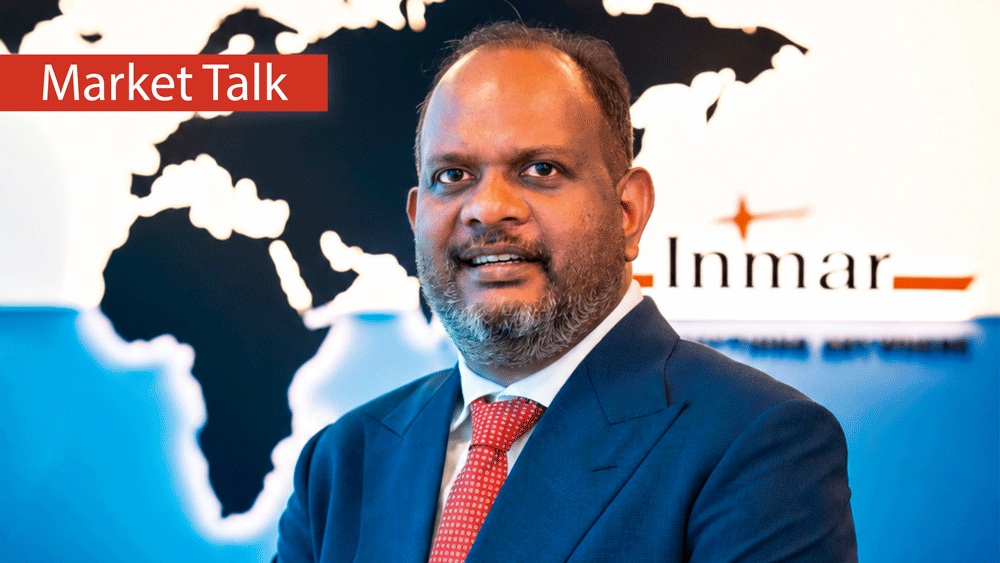
In conversation with Saji Manikanta, managing director of Inmar Shipping & Logistics
 How have disruptions to key shipping routes changed cargo movements across the region?
The closure of the Strait of Hormuz, combined with disruptions in the Gulf of Aden, has materially reshaped cargo flows across the Gulf and Red Sea regions. Dry bulk and container movements to and from ports within the Gulf have come to a near standstill, removing one of the region’s most critical trade arteries. Cargo flows to and from Saudi ports via the Red Sea have also been severely affected, leaving shippers and cargo owners with far fewer reliable options for moving goods in and out of the region. The result is a market in which established routings can no longer be taken for granted, and where speed of adaptation has become as important as capacity in keeping cargo moving.

How is Inmar helping clients manage geopolitical risks, changing routes and rising logistics costs?
With the Strait of Hormuz closed and the Gulf of Aden disrupted, ports such as Fujairah, Sohar and Khor Fakkan have taken on renewed strategic importance as alternative gateways to the region. Inmar is well placed to serve clients through these ports, complemented by overland transportation to destinations across the Gulf. Our focus is on helping customers navigate geopolitical uncertainty with practical, workable routings rather than waiting for conditions to normalise. By combining sea and land solutions, we help clients keep their cargo moving, protect their project timelines and manage the pressure on logistics costs that these disruptions have created.
What are the biggest challenges in moving oversized project cargo across the Middle East?
The biggest challenge is that the region’s road and rail infrastructure remains limited when it comes to moving oversized cargo. Historically, shipments of this scale have moved by sea, so overland networks were never developed with them in mind. The sudden shift in routing has therefore placed considerable strain on existing infrastructure, which is now being asked to absorb volumes and dimensions it was not designed to handle. Moving oversized project cargo in this environment demands meticulous planning, close coordination across every leg of the journey, and a realistic understanding of what the available infrastructure can support.
How is technology changing project cargo management and improving visibility for clients?
Technology is enabling better planning and stronger connectivity across both ocean and land transportation, which is essential in project cargo, where every leg of the journey depends on the one before it. It allows us to plan routes more effectively, anticipate weather conditions, identify upcoming port congestion, and evaluate alternative ports and routes well in advance. In a volatile operating environment, that foresight is invaluable. It helps us make informed decisions earlier, reduce the risk of delays, and give clients greater visibility, confidence and clarity on how their cargo is moving, from origin through to final delivery.
How do you see the Middle East’s logistics landscape evolving and what will this mean for Inmar?
The ongoing conflict in the Middle East has caused significant damage to key infrastructure and is driving demand for alternatives that bypass the Strait of Hormuz and, potentially, the Red Sea routes. Building this new infrastructure and rehabilitating damaged facilities will require substantial volumes of materials, which in turn will generate sustained demand for logistics services. As a result, we expect the logistics landscape in the Middle East to remain robust and active in the near term. For Inmar, this reinforces the importance of staying flexible and well connected, so that we can support clients as the region’s trade routes and infrastructure are rebuilt and reconfigured.
Published in partnership with

You might also like...

QatarEnergy allows more time for North Field West topside bids
19 October 2026

Algeria tenders 341km southern rail section
19 October 2026

Adnoc to host site visit for new LNG project in the UAE
19 October 2026

Consortium details emerge for Saudi round seven wind IPPs
19 October 2026

A MEED Subscription...
Subscribe or upgrade your current MEED.com package to support your strategic planning with the MENA region’s best source of business information. Proceed to our online shop below to find out more about the features in each package.
Take advantage of our introductory offers below for new subscribers and purchase your access today! If you are an existing client, please reach out to your account manager.