


Abu Dhabi’s decision to leave Opec after nearly six decades may not have been easy, but it was necessary to support its growing ambition to fully utilise the oil production capacity it has worked so hard to build
 Commentary
Indrajit Sen
Oil & gas editor
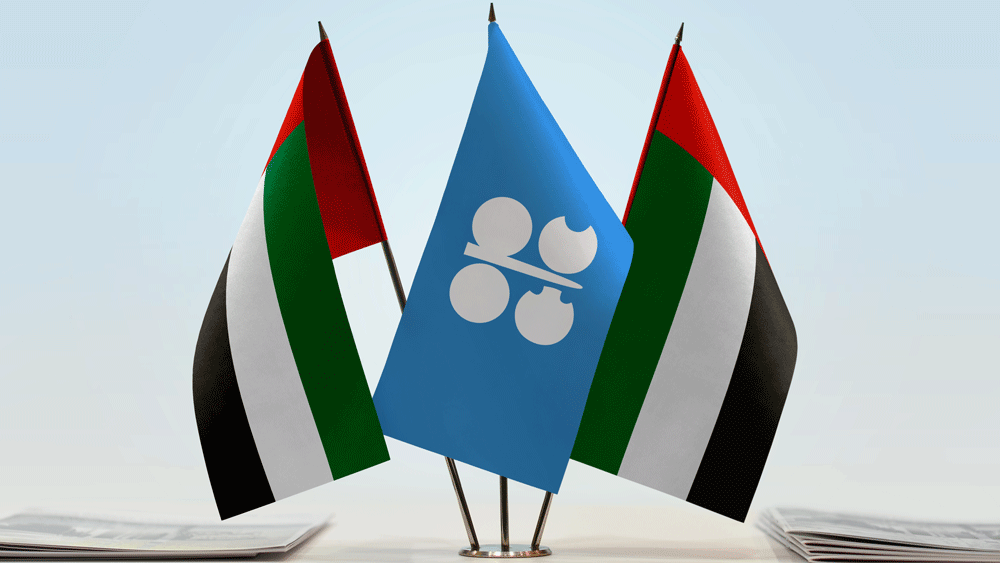
The UAE’s decision to leave Opec and the Opec+ grouping marks a significant turning point in global oil markets and highlights shifting geopolitical dynamics and evolving supply expectations.
The UAE announced it will leave the producer alliance effective 1 May, ending nearly six decades of membership. The move reflects a broader strategic shift, as the country seeks greater flexibility over its production policy amid rising capacity and changing market conditions.
For oil markets, this is about more than one country wanting to pump more oil. Abu Dhabi National Oil Company (Adnoc) has spent billions of dollars over the years to raise crude production capacity to 5 million barrels a day.
Opec+ quotas had increasingly looked as though they were stifling Abu Dhabi’s growing desire to maximise revenues by tapping into its expanded spare capacity. Leaving the Opec+ coalition gives Abu Dhabi more room to monetise those investments.
The timing also matters. It comes against a backdrop of regional security concerns, tensions around Iran and the Strait of Hormuz, and a sense that consumers are once again being squeezed by high energy costs and depleted strategic reserves.
The immediate dip in the price of global benchmark Brent crude following the announcement of the UAE’s decision on 28 April showed the market’s first instinct: more UAE barrels could mean more supply and lower prices. However, the price rebound on 29 April, with Brent trading around $111 a barrel, also tells the other half of the story: extra capacity does not instantly become risk-free supply when regional bottlenecks and security threats remain front and centre.
For Opec+, this is a blow to unity and to Saudi Arabia’s ability to marshal producer discipline. It does not mean that a price war will start tomorrow, but it raises the risk of other member states choosing to abandon the alliance’s cooperation mechanism and pursue a higher market share. In trading terms, this adds a new volatility premium: more potential supply, less cartel discipline and a Gulf energy landscape that looks significantly less predictable.
The announcement comes at a time of heightened uncertainty in global energy markets, with geopolitical tensions, supply chain constraints and demand recovery trends all contributing to price volatility. The UAE’s exit is expected to reshape market expectations around supply flexibility and producer coordination.

You might also like...


Algeria extends bid deadline for stalled power plant
30 April 2026


Dewa announces new record for power reliability
30 April 2026


A MEED Subscription...
Subscribe or upgrade your current MEED.com package to support your strategic planning with the MENA region’s best source of business information. Proceed to our online shop below to find out more about the features in each package.
Take advantage of our introductory offers below for new subscribers and purchase your access today! If you are an existing client, please reach out to your account manager.